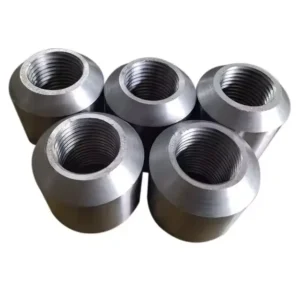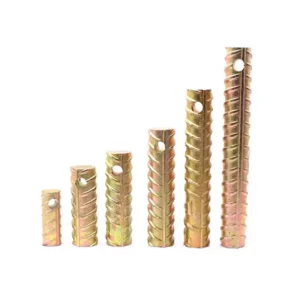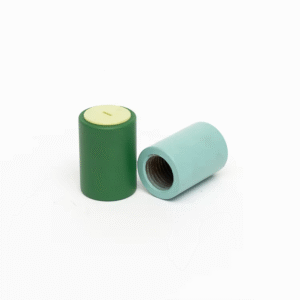

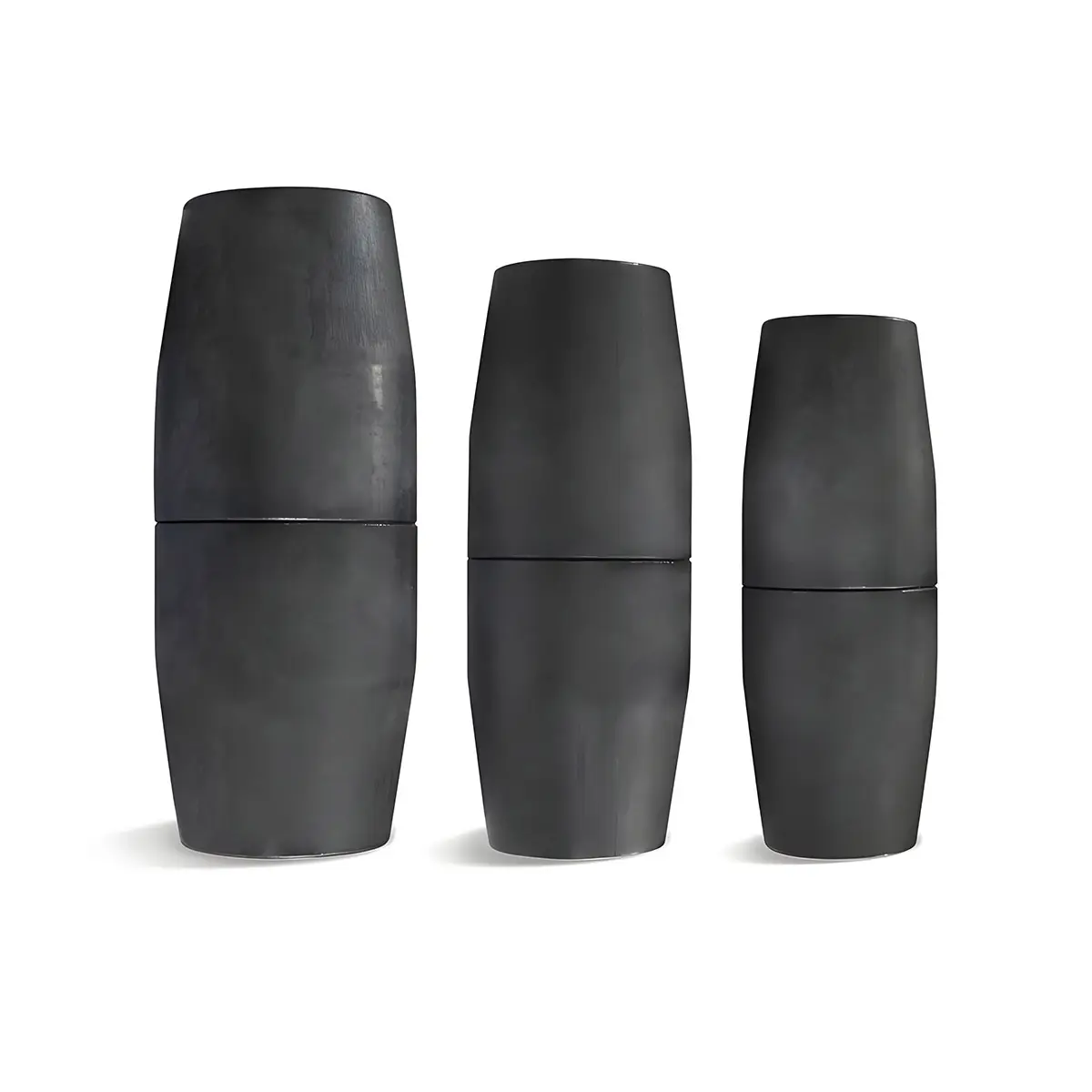
One Touch Rebar Coupler
Description
One Touch Rebar Coupler is an advanced mechanical splicing system designed for rapid and effortless reinforcement bar (rebar) connections, eliminating the need for threading, welding, or specialized tools. Widely utilized in the construction industry—particularly in concrete structures—it delivers robust, efficient, and seamless rebar splicing performance.
Product Specifications and Models
| One Touch Rebar Coupler | |||
| Model | Outside Diameter D(mm) | Length L(mm) | Weight (KG) |
| D13 | 35 | 100 | 0.51 |
| D16 | 40 | 106 | 0.63 |
| D19 | 46 | 123 | 0.85 |
| D22 | 51 | 133 | 1 |
| D25 | 56 | 143 | 1.45 |
| D29 | 65 | 166 | 2.05 |
| D32 | 70 | 170 | 2.55 |
| D36 | 78 | 190 | 3.5 |
| D40 | 83 | 200 | 4.6 |
The One Touch Rebar Coupler is a connecting device designed to securely engage with the grooves of deformed rebar nodes, offering exceptional tensile strength. This coupler assembly comprises a central steel pipe equipped with an internal ring, two springs, two plastic guards, two locking mechanisms, and two end caps. All components are constructed from carbon steel, except for the guards, which are made of plastic.
This system is suitable for splicing deformed steel reinforcing bars that comply with ASTM A615 Grade 60 and ASTM A706 Grade 60 standards. It supports US Customary bar sizes including Nos. 4, 5, 6, 7, 8, 9, 10, 11, and 18.
Technical Specifications and Performance
Applicable Rebar Specifications:
Diameter Range: Typically covers Φ12mm – Φ40mm deformed bars.
Rebar Grades: Compatible with major standards, such as Chinese HRB400, HRB500; international ASTM A615 Gr.60/Gr.80, ASTM A706; and BS 4449.
Coupler Material:
Material: Made from high-quality alloy structural steel (e.g., #45 Carbon Steel, 40Cr).
Strength: The tensile strength of the coupler body is generally not less than that of the connected rebar, ensuring failure occurs in the rebar, not the coupler.
Manufacturing Process: Produced through precision forging, machining, and heat treatment (quenching & tempering) to ensure hardness and toughness.
Mechanical Performance:
Tensile Strength: The tensile strength of the spliced joint must be not less than the specified tensile strength of the rebar, and fracture must occur in the rebar, not at the joint. This is the key performance indicator.
Yield Strength: The joint maintains the specified tensile-to-yield ratio of the rebar, meeting seismic requirements.
Ductility Performance: The joint area exhibits excellent ductility and cyclic tension-compression performance, meeting the ductility demands of structures in high seismic zones.
Fatigue Performance: Offers stable performance under alternating loads, suitable for dynamically loaded structures.
Product Advantages
High Strength & Reliability: Joint performance meets the highest industry standards (e.g., Grade I per JGJ 107), fully utilizing the strength and ductility of the rebar, ensuring a connection strength equal to the rebar itself.
Easy Installation & High Construction Efficiency:
No Rebar Rotation Required: Solves connection challenges in scenarios where rebar cannot be rotated.
No Specialized Equipment Needed: Often requires only simple hand tools (e.g., an installation wrench) or can be installed by hand, significantly saving labor and time.
Visual Inspection: Many designs feature inspection windows or marks for quick verification of proper installation, ensuring quality control.
Excellent Seismic Performance: Its superior ductility and cyclic performance make it ideal for critical seismic structures like hospitals, schools, and nuclear power plants.
Material & Cost Savings:
Eliminates consumables (electrodes, gas, electricity) required for welding.
Prevents loss of cross-sectional area common with threading, saving rebar.
Rapid installation drastically reduces labor costs and shortens project schedules.
All-Weather Construction: Unaffected by weather conditions (rain, wind) and does not require the skilled labor and extensive preparation needed for welding.