
HSS Rebar Coupler Threading Tap for Precision Cutting
Description
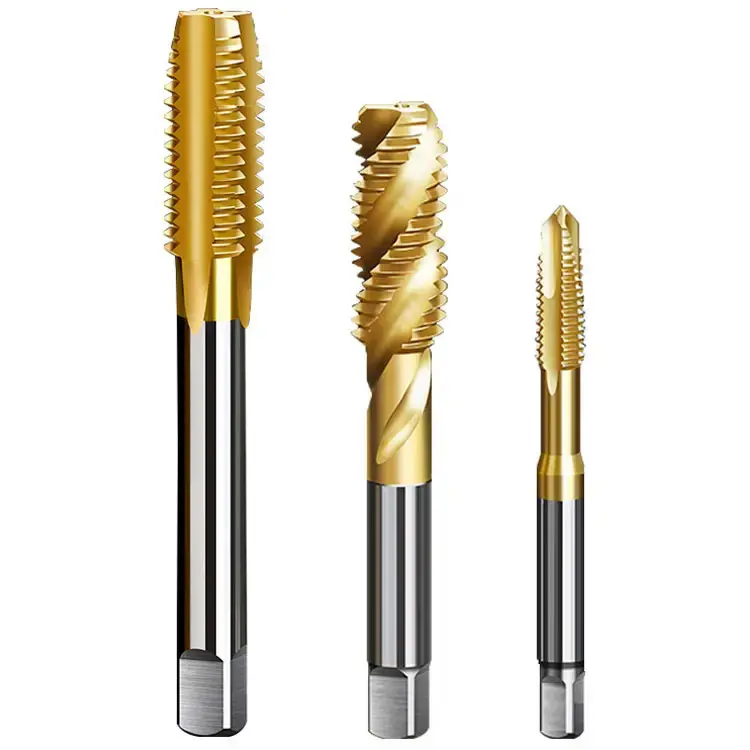
HSS Rebar Coupler Threading Tap for Precision Cutting are straight flute taps, They feature high cutting edge strength, easily selectable cutting cone lengths, and convenient regrinding. Applications: High-hardness materials, wear-prone materials (powdery chips), through-hole/blind-hole machining.
During the production of rebar coupler, taps are primarily used to cut threads into the sleeves, thereby creating internal threads on the rebar sleeves.
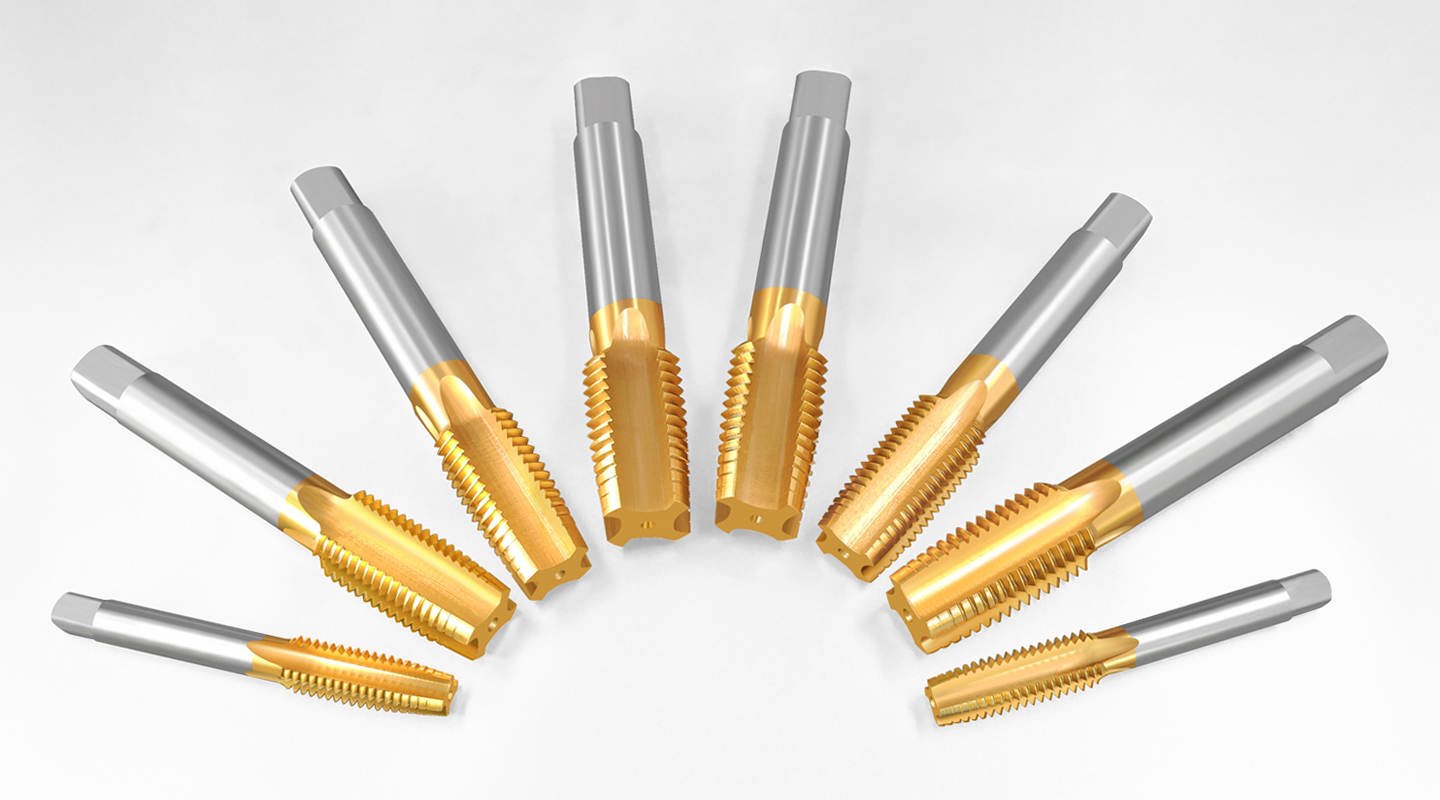
Rebar Coupler Threading Tap Feature
- Strong chip evacuation: The straight flute design ensures chips are ejected in a straight line, eliminating the chip entanglement issues common with spiral flute taps. This makes it particularly suitable for machining blind holes (with approximately 30% improved chip evacuation efficiency).
- High versatility: Capable of machining both through holes and blind holes, compatible with common materials like cast iron and low-carbon steel (e.g., ISO P1-P3 grades).
- Simple and durable construction: The absence of a helix angle reduces manufacturing costs, extending service life by 15%-20% compared to spiral flute taps (Source: Machining Tool Handbook).
- High-precision control: Enhanced rigidity enables thread tolerances up to 6H grade (ISO standard), suitable for demanding precision machining.
- Cost-effective efficiency: Unit price is 20%-30% lower than spiral flute taps, ideal for mass production.
Rebar Coupler Threading Tap parameter
| Product | Rebar Diameter(mm) | |||||||||
| Thread Tap | 14 | 16 | 18 | 20 | 22 | 25 | 28 | 32 | 36 | 40 |
Tips for Use
1. Speed and Feed Matching:
- Hard materials (e.g., 45# steel): 10-15 m/min spindle speed, 0.1-0.15 mm feed per revolution;
- Soft materials (e.g., aluminum alloy): 15-20 m/min spindle speed, 0.2-0.3 mm feed rate (refer to OSG technical guidelines).
2. Coolant Selection:
- Steel machining: 5%-10% emulsion recommended;
- Cast iron machining: Compressed air or dry cutting may be used to prevent edge chipping caused by coolant washout.
3. Bottom clearance allowance: When machining blind holes, ensure the hole depth exceeds the thread depth by 2-3 times the pitch (e.g., allow 3-5mm extra for M6 threads) to prevent chip accumulation.
4. Regular wear inspection: Inspect the cutting edge after machining 50-100 holes. Replace immediately if burrs appear or dimensional deviations occur (e.g., mean diameter deviation >0.05mm).
Frequently Asked Questions
1: Tap Breakage
Cause: Excessive spindle speed (>25 m/min) or uneven axial force.
Countermeasure: Switch to a floating chuck with axial compensation set to 0.1–0.2 mm .
2: Rough Thread Surface
Cause: Insufficient cooling or improper front angle.
Countermeasure: Adjust front angle to 8°–12° and increase coolant flow rate to 5 L/min or higher.