
Mechanical Couplers vs. Welding vs. Tying: A Practical Comparison
The correct selection of reinforcement connection methods directly impacts the quality of construction works. An analysis and comparison of three common reinforcement connection methods is presented below, in accordance with relevant codes and standards:
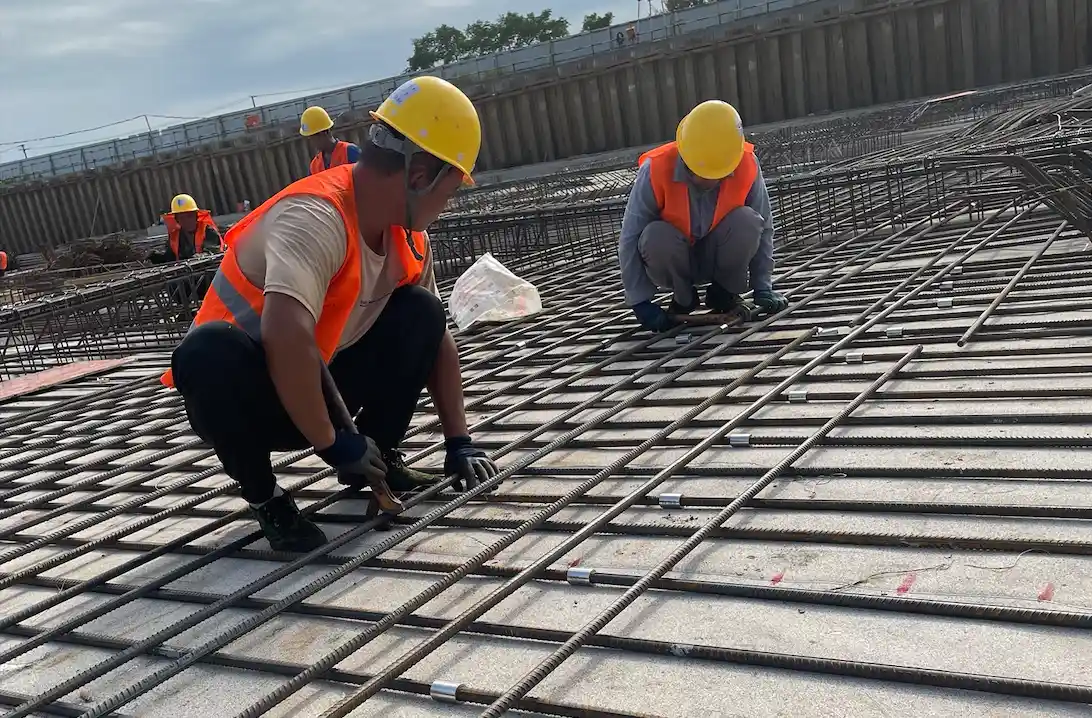
1、Lap splicing
2、Welding
3、Mechanical Couplers
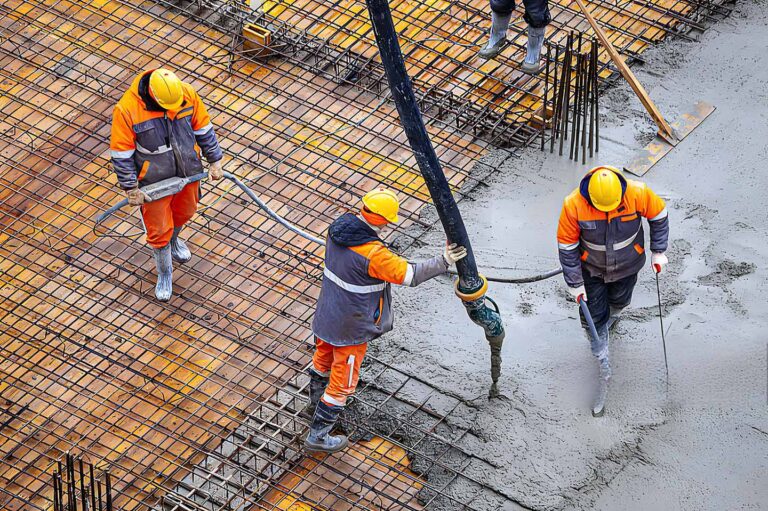
I. Reinforcing Bar Lap Joints
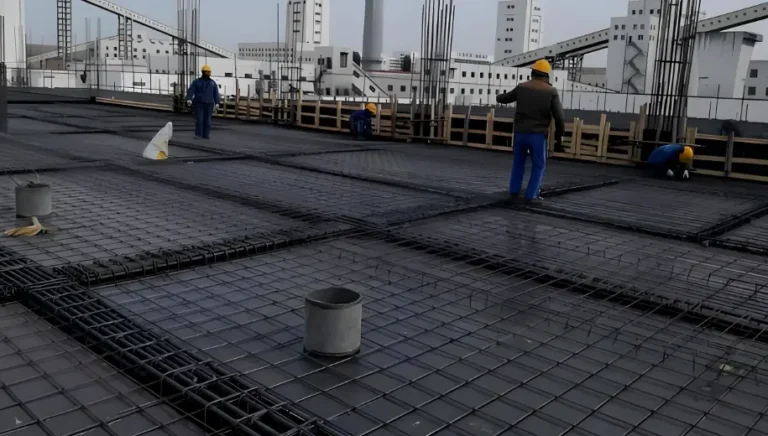
The tying and connection of reinforcing bars shall comply with the relevant requirements of the national standard GB50010, the Code for Design of Concrete Structures. On construction sites, tension reinforcement generally refers to the longitudinal reinforcement within beams, while compression reinforcement typically denotes the vertical reinforcement within shear walls and columns.
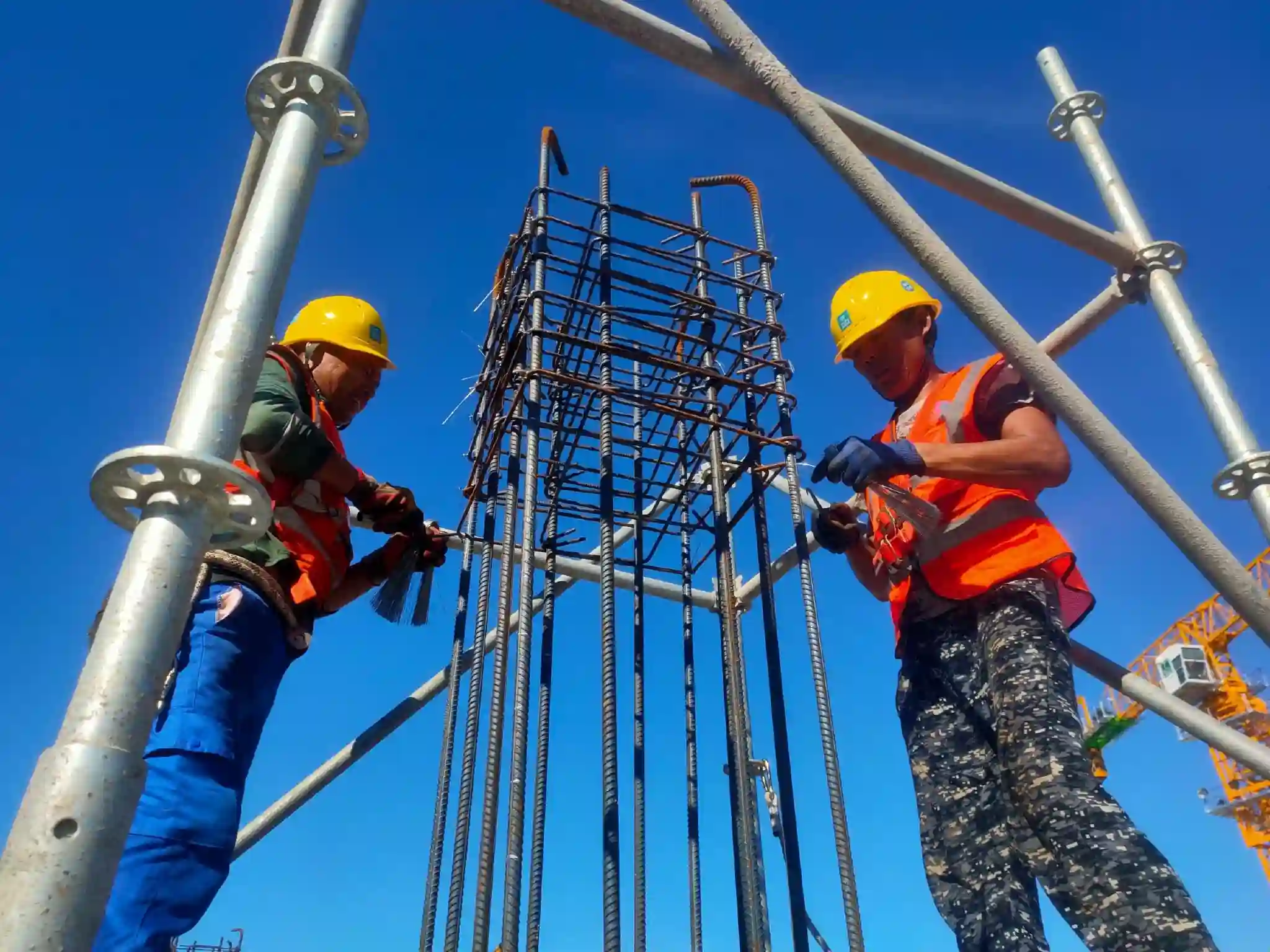
For reinforcement used in walls and columns, bars exceeding 22mm in diameter are rarely connected by tying. This is because larger bars incur higher tying costs and present challenges in ensuring quality. Welding or mechanical connections are predominantly employed instead, offering both assured quality and economic rationality.
Advantages
- Simple construction, fast speed, adaptable to various environments, and relatively low construction costs.
- No additional machinery or equipment required for installation or inspection, with guaranteed quality.
Disadvantages
- Reinforcing bar lap splicing requires overlapping connections, resulting in higher rebar consumption.
- Lap splicing exhibits inferior load transfer performance.
- Lap splicing occupies structural member area, potentially hindering concrete pouring.
- Omission of bar splicing, failure to anticipate construction conditions, and disregard for installation sequence may complicate subsequent splicing operations.
- Non-compliant tying practices deviating from drawing dimensions may cause excessive negative reinforcement spacing.
II. Welded Reinforcement Connections
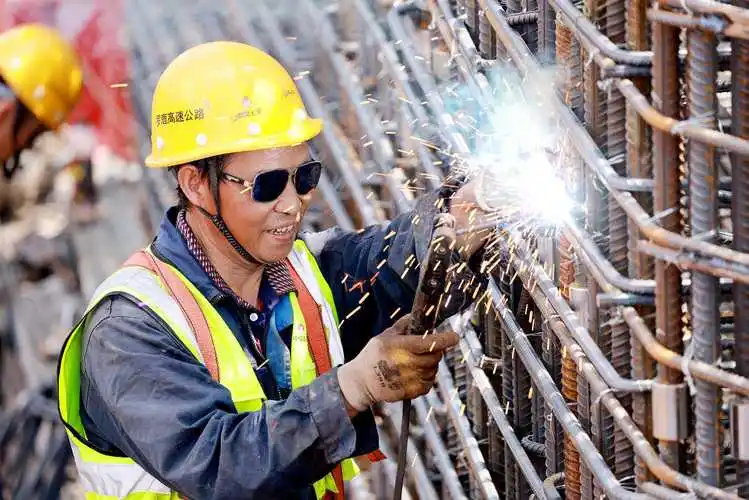
There are five types of steel bar welding connections: flash butt welding, arc welding, electroslag pressure welding, gas pressure welding, and embedded steel bar submerged arc pressure welding. Electroslag pressure welding is commonly used in construction, primarily for connecting steel bars in columns and shear walls. Steel bar welding connections must comply with the relevant requirements of the national standard GB50010 “Code for Design of Concrete Structures” and the industry standard JGJ18 “Code for Welding and Acceptance of Reinforcing Bars.”
Advantages
- This connection method does not interfere with other construction processes, thereby enhancing overall construction efficiency.
- Compared to tying, it imposes less stringent requirements on reinforcing bars and offers greater adaptability to site conditions.
- Eliminating the need for lap splicing conserves steel materials, yielding significant economic benefits.
Disadvantages
- Requires specialized construction equipment, materials, and power supply, with high demands on electrical sources.
- Demands strict personnel qualifications and specific construction environment requirements; cannot be performed during rainy or snowy weather.
- Cannot weld inclined or horizontal reinforcing bars exceeding a certain angle.
- Poor quality control leads to a high probability of nonconforming products.
- Inappropriate matching of welding consumables with base materials, or element burn-off during welding, can alter the chemical composition of the weld metal or result in non-compliant weld microstructure. This may degrade mechanical properties and compromise joint corrosion resistance.
- Improper welding parameters causing overburning or overheating, with prolonged exposure of the heat-affected zone to high temperatures, can result in coarse grain structure (overheated condition). Further temperature increases or extended dwell times may cause grain boundary oxidation or localized melting, leading to overburning. Overheating can be remedied through heat treatment, whereas overburning constitutes an irreversible defect.
III. Mechanical Couplers
Reinforcing bar mechanical couplers technology represents a novel reinforcement joining process, hailed as the “third-generation rebar joint” following tying and welding. It offers advantages including joint strength exceeding that of the base material, installation speeds five times faster than welding, zero pollution, and 20% steel savings. Hengshui Anda Machinery Equipment Co., Ltd. possesses advanced sleeve production technology and has participated in numerous large-scale domestic and international projects, making it your optimal choice for sleeve suppliers.

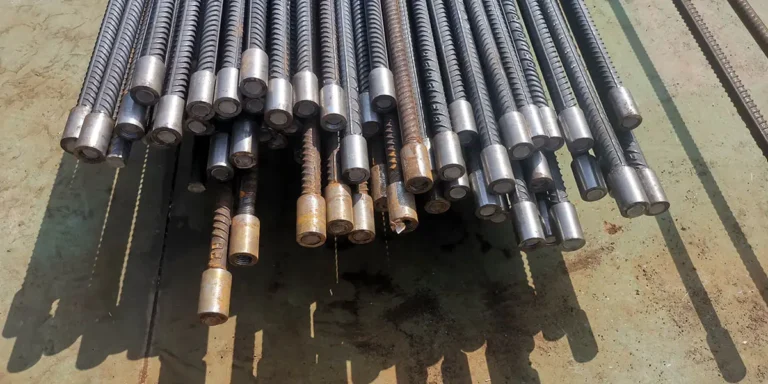
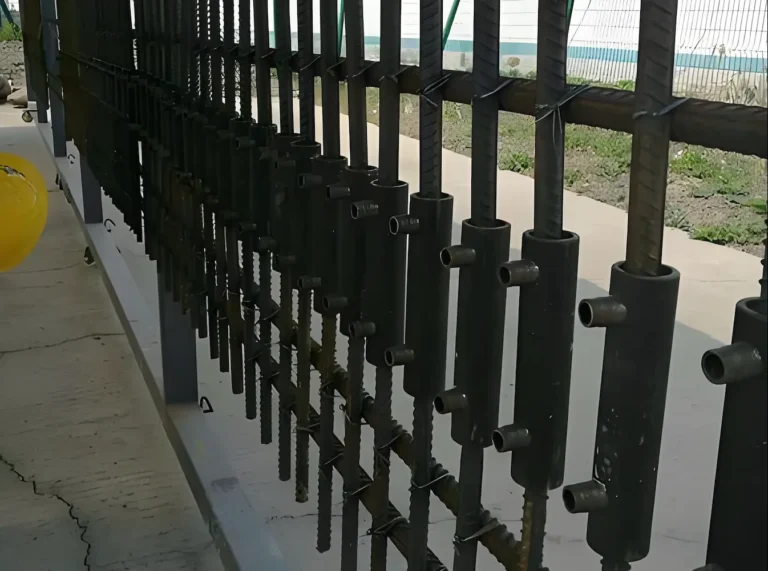
Mechanical couplers achieve bonding through the mechanical interaction between sleeves and reinforcing bars (thread interlocking and compression deformation), eliminating the need for high temperatures or tying. These joints offer stable mechanical properties and are currently the preferred method for large-diameter reinforcing bars and seismic structures. Their core characteristics include excellent strength consistency, high ductility, and minimal susceptibility to construction environment variations.
| Connection Type | Process Principle | Key Technical Requirements |
| Rolled Straight Thread Connection (Most Common) | The rebar end is rolled into straight threads by a rolling machine, then tightened with an internally threaded coupler, transferring force through thread engagement | 1. Thread head accuracy: Complete thread profile, length tolerance ±2mm; 2. Coupler installation: 1-2 threads exposed after tightening (avoid over-loose or over-tight); 3. Coupler specs: Made of 45# steel with internal thread precision matching the rebar thread head |
| Rib-peeled Rolled Straight Thread Connection (Upgraded Version) | First “peel ribs” from rebar end (remove longitudinal ribs for uniform diameter), then roll threads to reduce cross-section weakening | 1. Rib-peeling diameter: 0.5-1mm smaller than nominal rebar diameter for effective thread profile; 2. Applicable rebar: High-strength steel like HRB400/HRB500 (prevent rolling cracks) |
| Sleeve Extrusion Connection | A metal sleeve is deformed by an extrusion machine to tightly bite the rebar surface, transferring force through friction and mechanical interlock | 1. Extrusion passes: Determined by rebar diameter (e.g., Φ25 rebar needs 3-4 passes); 2. Extrusion sequence: From coupler middle to both ends to avoid end stress concentration |
| Tapered Thread Connection (Being Phased Out) | Rebar end is processed into tapered threads and tightened with a tapered internal thread coupler, transferring force through thread incline | 1. Disadvantages: Thread processing weakens rebar section, causing tensile strength fluctuation; 2. Applications: Only for non-seismic, low-stress areas (now replaced by straight thread) |
Conclusion Recommendations
- Each type of joint, except mechanical connectors, has its own applicable scope; care must be taken not to exceed these limits.
- Although steel bar straight thread connections are the most expensive, they are the most widely used due to their superior quality and ease of operation.
- Welded connections, while moderately priced and recommended for use, are gradually losing market share due to their demanding operational requirements, high energy consumption, and inability to fully control quality.