


Rebar coupler for tunnel – Baoji to Tianshui tunnel project
Rebar coupler for tunnel applications are exemplified in the Baoji to Tianshui Up Line Realignment Project along the Longhai Railway. This project includes the construction of 11.298 kilometers of new bridges (30 structures) and 45.752 kilometers of new tunnels (21 structures), resulting in a bridge–tunnel ratio of 83.22%. Tunnel engineering is one of the most critical control elements throughout the entire construction process.
To meet the enhanced structural safety and durability requirements introduced by the railway line upgrade, the reinforcement connection methods for secondary linings, end structures, and portal sections must ensure high strength, high stability, and high construction efficiency. Under these stringent demands, steel bar sleeve connection technology was widely adopted in this project, becoming one of its core construction techniques.
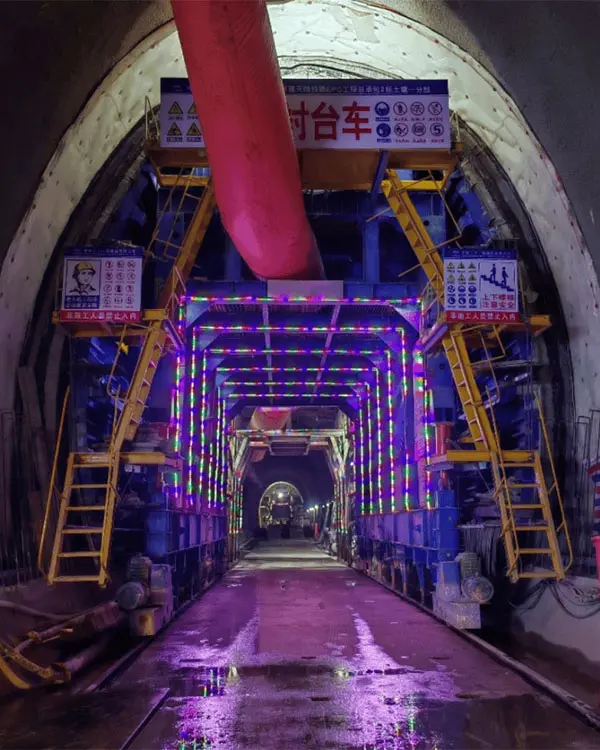
Project Background
The Baoji-Tianshui Route Realignment Project is situated along a critical transportation corridor connecting Shaanxi and Gansu provinces, serving as a vital component in optimizing the regional railway network. The route traverses complex geological terrain, with tunnels accounting for a significant portion of the alignment. Certain tunnels pass through weak rock formations and fault zones, necessitating stringent structural safety requirements.
As the critical structural element bearing rock pressure and providing overall stability, the quality of steel bar connections in the secondary lining reinforcement directly impacts the structure’s load-bearing capacity and service life. Therefore, the project design phase explicitly mandated the use of mechanical connections to replace traditional tying or welding methods, thereby enhancing construction quality and overall safety.
Among various mechanical rebar connection methods, straight thread rebar coupler technology emerged as the preferred choice due to its high strength, strong construction controllability, and broad applicability.
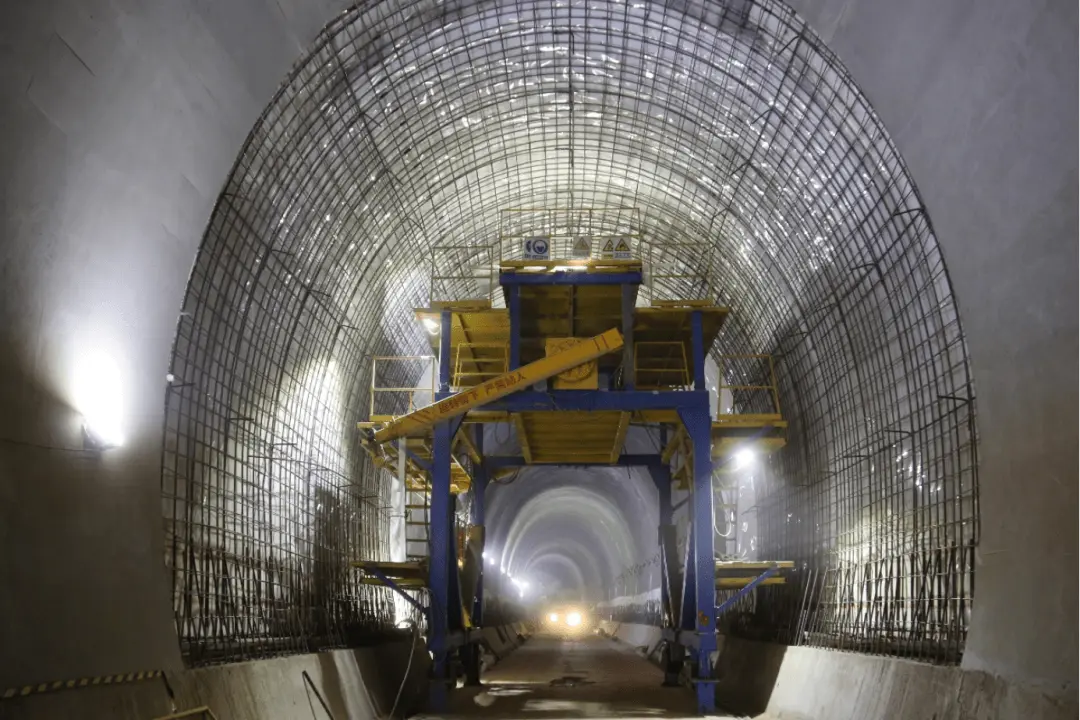
Application Scenario in the Baoji-Tianshui Tunnel
Reinforcement sleeves in this project are primarily applied in the following areas:
1. Longitudinal Reinforcement Connection in Secondary Lining
Due to the extensive length of tunnel secondary linings and segmented pouring, longitudinal reinforcement must be connected at pour joint locations. Mechanical sleeves thus represent the most stable and reliable method.
2. Reinforcement Reinforcement Zones at Portal and End Sections
These zones experience concentrated structural stresses and high reinforcement density. rebar coupler connections minimize field welding and enhance finished product protection.
3. Construction joint reinforcement extension
For exceptionally long structural segments, mechanical connections are required to reinforce cross-sectional integrity.
In these scenarios, rebar coupler specifications primarily range from 20mm to 28mm. Procurement and batch management strictly adhere to design strength grades.
Construction Process Flow
To ensure the quality of rebar connections, tunnel construction strictly adheres to the following process flow as specified by standards:
1. Rebar End Processing and Threading
- Rebar ends are processed using a thread rolling machine.
- Thread length and precision are inspected by designated personnel.
- Ends must be smooth and burr-free, with complete and clear threads.
- Processed rebars are numbered and stacked by category.
2. Sleeve Installation and Butt Welding
- Screw the coupling onto one rebar end, leaving sufficient overlap length
- Screw the second rebar into the coupling and tighten using a torque wrench
- Mark the coupling once the torque reaches the design value
- Ensure axial alignment of rebars to prevent eccentric connections
- This step is critical for ensuring coupling joint quality.
3. Finished Product Protection
- Prevent contamination of rebar ends
- Prohibit foot traffic in the construction area
- Apply corrosion protection to the exterior of couplings
Quality Control and Testing Standards
This project implements a rigorous “three-inspection system” and sampling inspection regime for quality control, ensuring each sleeve joint meets specification requirements.
1. Sleeve Arrival Inspection
- Visual inspection
- Random tensile testing
- Batch record and traceability management
2. Construction Process Inspection
- Thread quality inspection
- Torque testing (to meet design requirements)
- Sleeve alignment dimension re-inspection
3. Post-Forming Inspection
- Reinforcement Positioning and Cover Inspection
- Reinforcement Stress Testing
- Localized Grooving and Re-inspection of Suspicious Areas
Reference Standards:
- General Technical Specifications for Mechanical Connection of Reinforcing Bars JGJ 107
- Construction Quality Acceptance Standard for Railway Concrete Structures
- Project-Specific Construction Plan and Technical Briefing
Construction Challenges and Solutions
1. Limited tunnel space makes rebar rotation difficult
Solution:
- Use reversible threading sleeves
- Introduce reducer sleeves to optimize layout
2. Inconsistent threading quality
Solution:
- Assign dedicated machinists
- Employ standard thread rolling equipment
- Conduct random inspections after each batch
Project Outcomes and Comprehensive Evaluation
Through the construction unit’s strict adherence to the process flow, the tensile strength, stability, and durability of the sleeve joints in this project have all met the design and specification requirements. The project has demonstrated the following significant results:
- Structural joint strength increased by over 20%
- Construction efficiency improved by approximately 30%
- Higher joint quality consistency, reducing human error
- Significantly reduced labor intensity in confined tunnel spaces
- Enhanced overall structural stability and seismic performance of the tunnel
The application of rebar sleeves has effectively ensured the construction quality of the Baoji-Tianshui realignment tunnel project, providing proven technical expertise for subsequent similar projects.
Summary
The successful application of Anda rebar Couplers in the Baoji-Tianshui Route Realignment Tunnel Project fully demonstrates their efficient, safe, and reliable advantages in tunnel concrete structure construction. Through standardized construction procedures, stringent quality control, and rational material allocation, this technology not only enhances project efficiency but also significantly improves the overall performance of tunnel structures. Moving forward, rebar sleeve connections will continue to play a vital role in complex geological conditions and large-scale infrastructure projects.