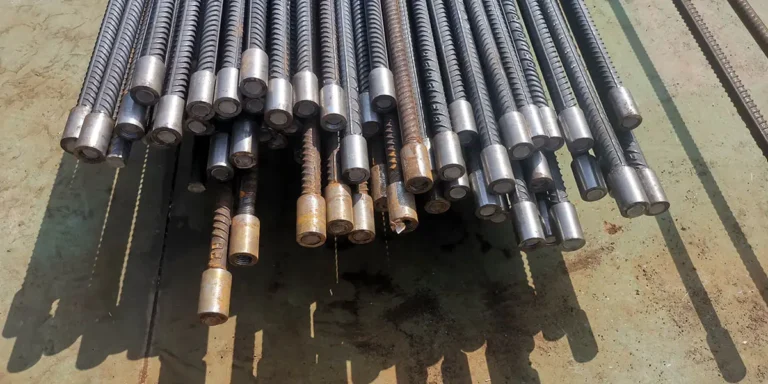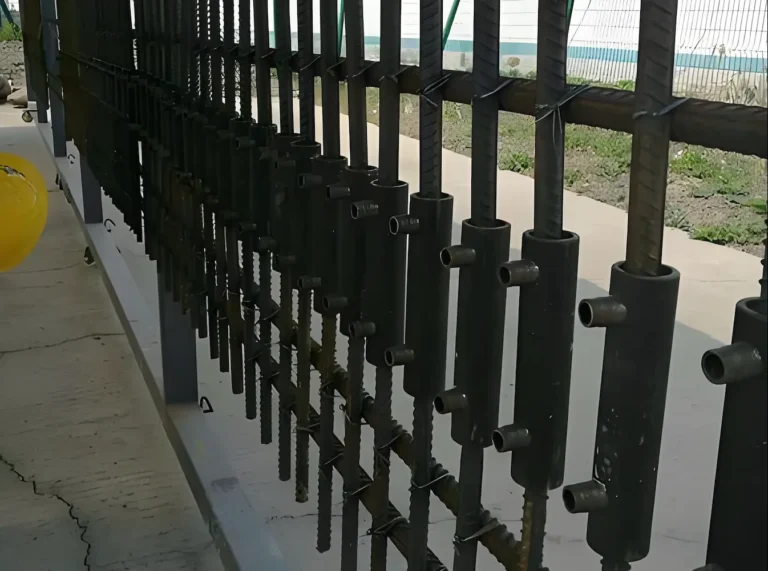

what is rebar coupler and its types?
A rebar coupler (sometimes called a mechanical splicing coupler or rebar connector) is a device used in reinforced concrete construction to connect two pieces of reinforcing bars (rebars) end-to-end, and plays a critical role in maintaining structural continuity and transmitting forces between them without compromising strength.
Due to their ability to reduce steel usage, accelerate project schedules, and enhance structural reliability, rebar couplers are increasingly favored in the construction industry. Rebar couplers come in various types, including threaded, grouted, and compression couplers, offering flexible and cost-effective solutions for modern engineering applications.
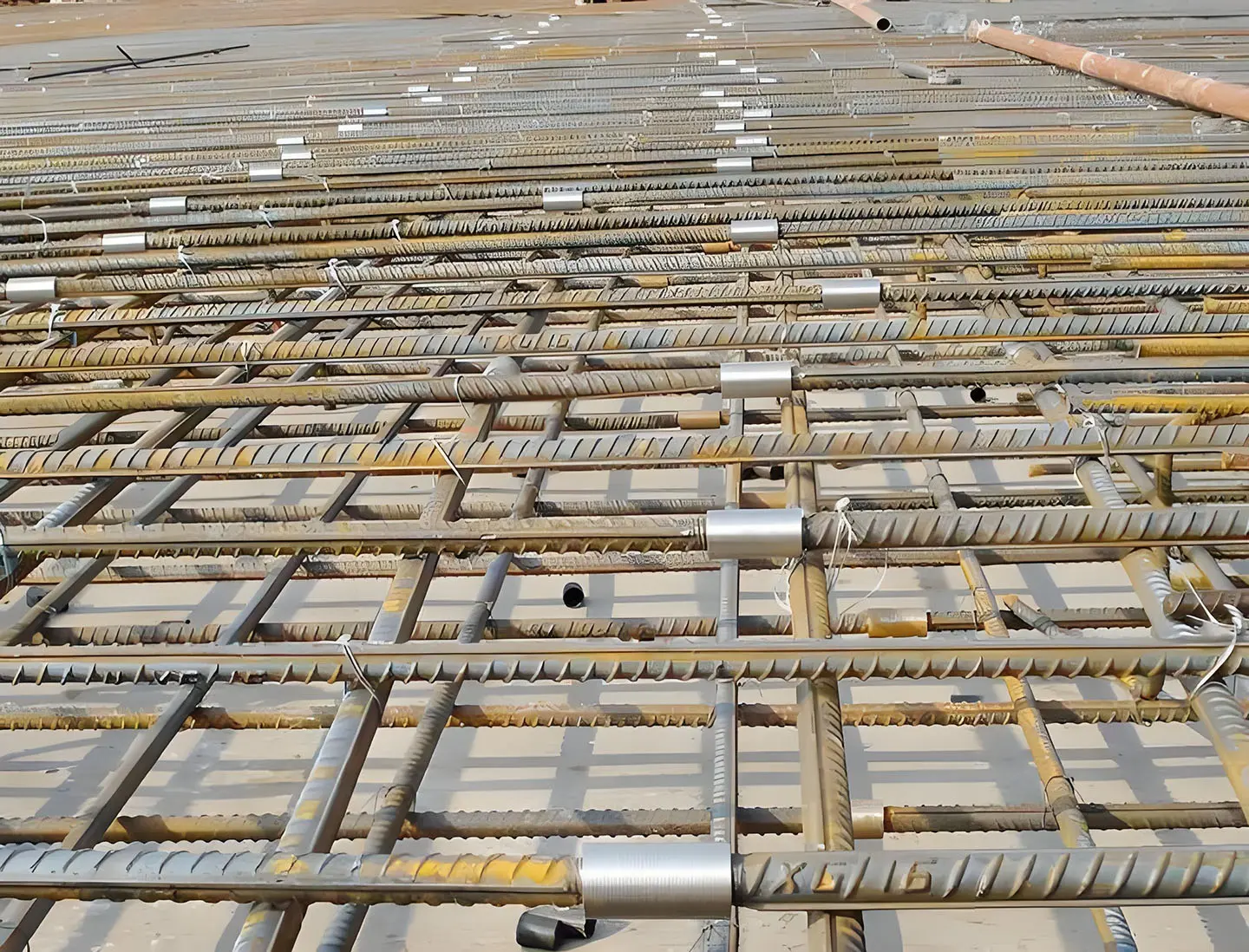
Common Types of rebar Couplers
Straight Threaded Rebar Coupler
- Connection Principle:

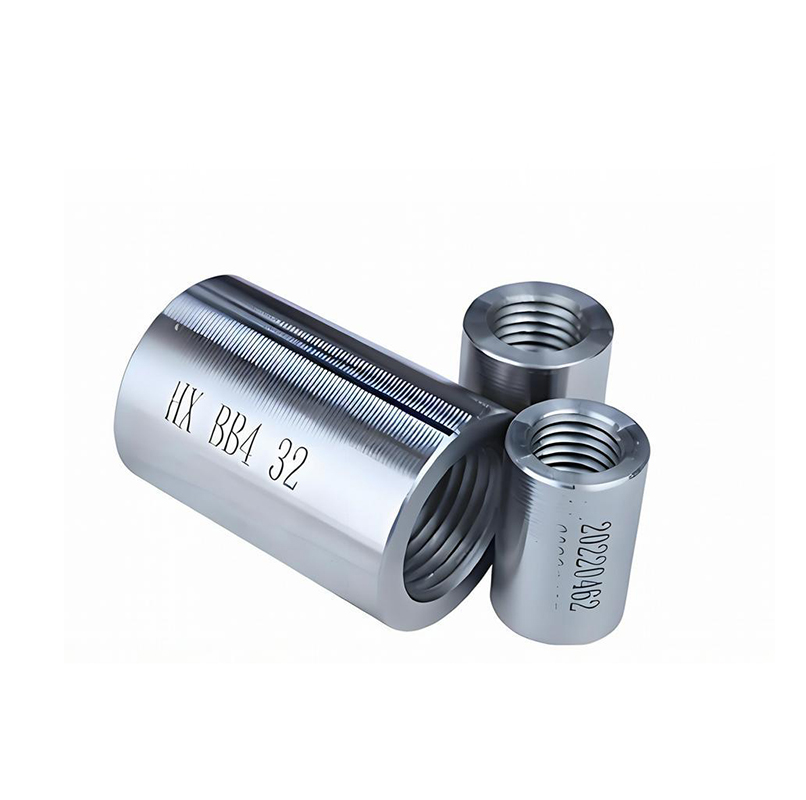
Straight Thread Sleeve Rebar Coupler 12-40mm
Straight threads are rolled onto the ends of reinforcing bars. Two bar ends are then screwed together using a sleeve machined with internal threads. Force is transmitted through the mechanical engagement of the threads. - Advantages:
- High strength: Joint strength can exceed 1.1 times the standard strength of the parent steel bar material (super-strength joint).
- Rapid construction: High degree of prefabrication enables straightforward on-site tightening operations, significantly outpacing welding and lap splicing in efficiency.
- Versatile applicability: Reversible threaded sleeves resolve non-rotatable reinforcement issues; reducer sleeves connect bars of differing diameters.
- Environmentally friendly and energy-efficient: Eliminates open-flame operations and consumes no electrical energy for welding.
- Consistent quality: Matured process facilitates quality inspection using torque wrench.
- Disadvantages:
- High precision is required for thread machining and sleeve quality.
- The ends of processed reinforcing bars must be properly protected to prevent thread damage.
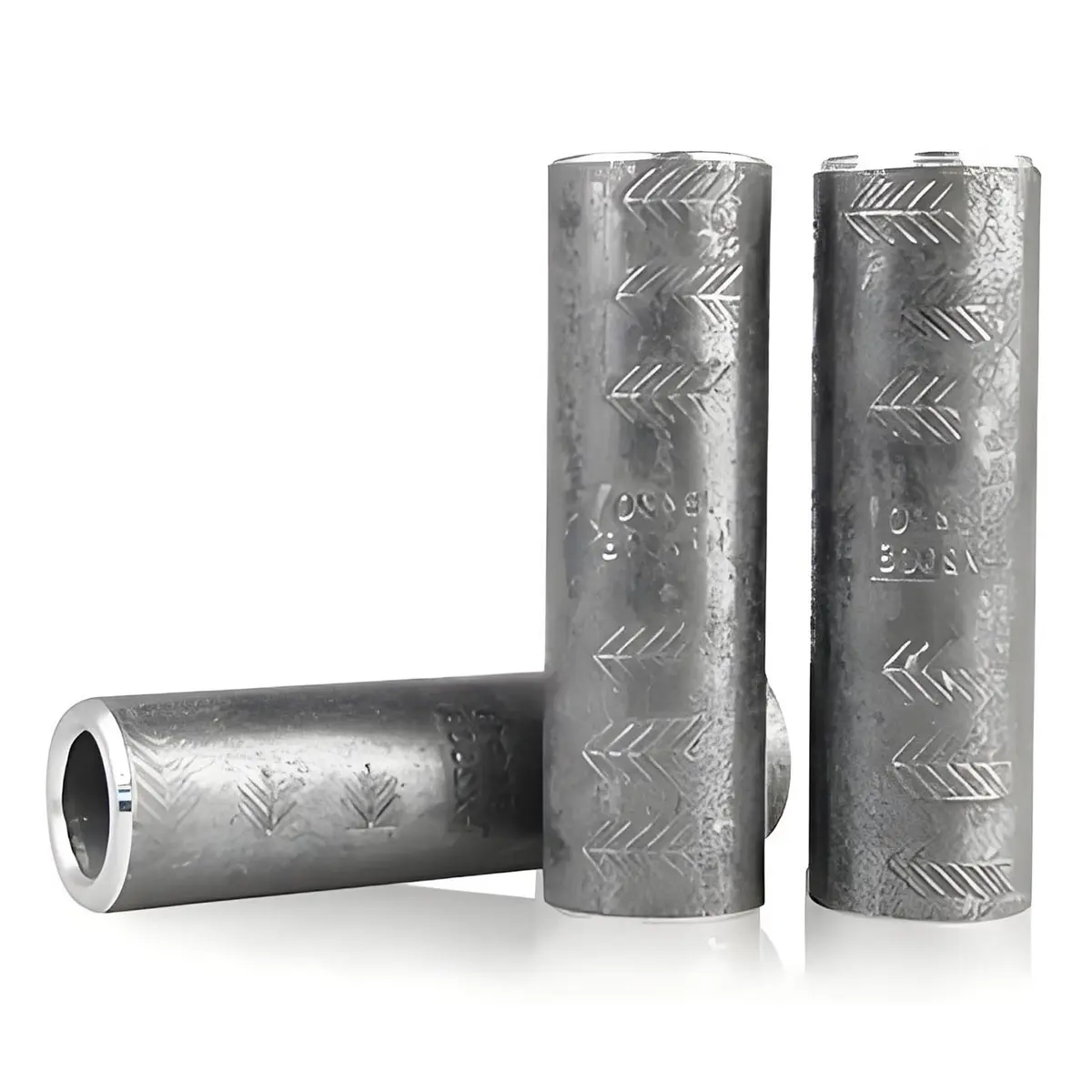
cold extrusion press rebar coupler
- Connection Principle:

This constitutes a non-threaded mechanical connection. A steel sleeve is fitted over the ends of two butt-jointed reinforcing bars. Using specialised forming equipment, radial pressure is applied to the sleeve’s exterior at ambient temperature. This induces plastic deformation in the sleeve metal, causing it to bite tightly into the transverse ribs on the bar surface. Force transmission is achieved through mechanical interlocking between the sleeve and bars, coupled with work hardening from cold forming. - Advantages:
- High strength and reliable performance: Joints exhibit high strength, excellent fatigue resistance, and exceptionally stable quality.
- No open flame, energy-efficient.
- Excellent adaptability to reinforcing bars: Suitable for virtually any type of ribbed reinforcing bar.
- Disadvantages:
- Bulky equipment: Requires ultra-high-pressure pump stations and clamping jaws, making it difficult to move.
- Slow construction speed: Each joint necessitates multiple squeezing operations, resulting in lower efficiency than straight thread connections.
- Higher overall cost: Significant capital investment in equipment, coupled with substantial material usage for the sleeves themselves.
One Touch Rebar Coupler
- Connection Principle:
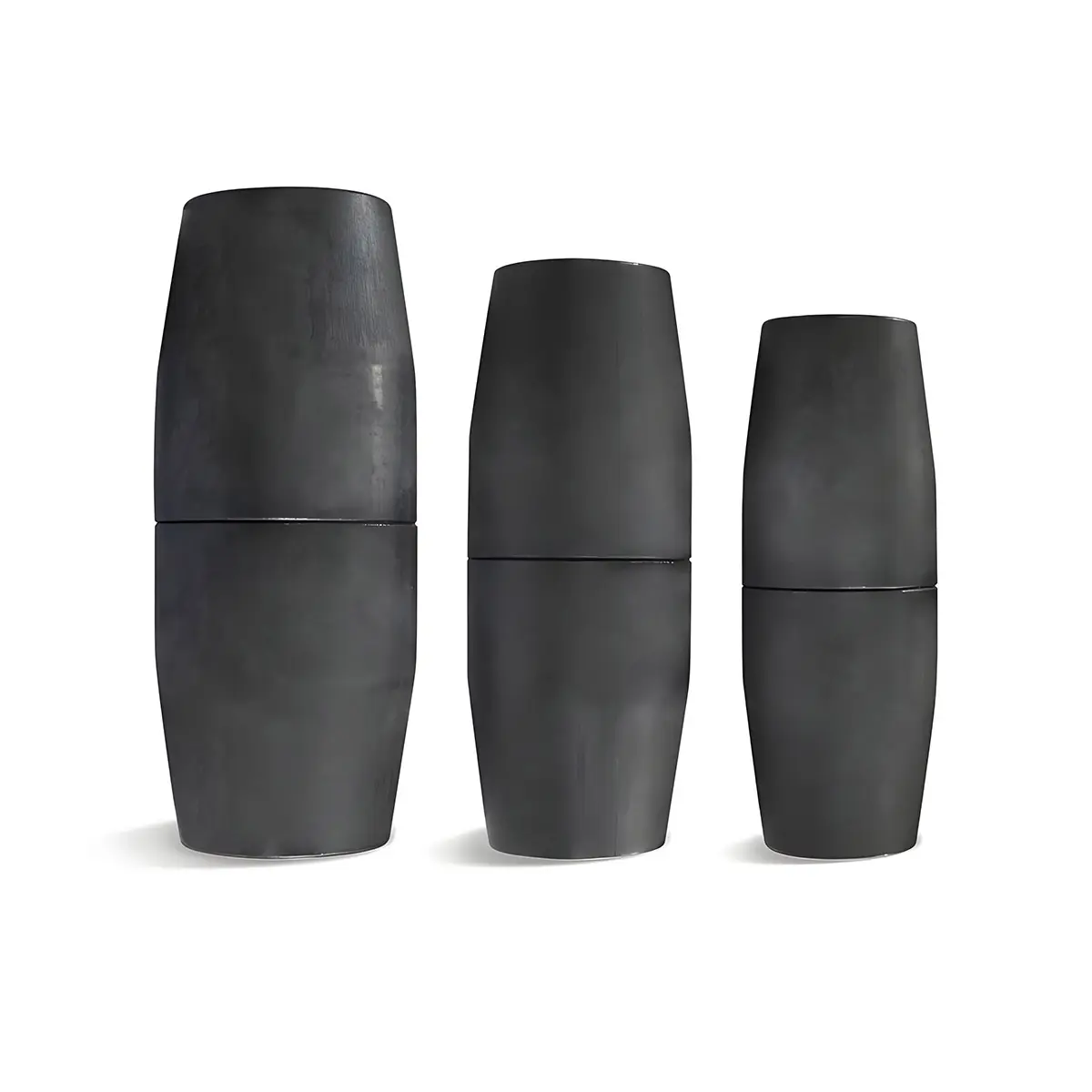
One Touch Rebar Couplers
Optimised from standard straight thread sleeves. Its core feature involves embedding a high-strength elastic self-locking ring (or nylon ring) internally at one or both ends of the sleeve. When the rebar is screwed in, it expands and passes over the self-locking ring. Upon tightening, the ring retracts, engaging within the thread grooves to form a mechanical locking mechanism. This effectively prevents rebar loosening under vibration or stress fluctuations. - Advantages:
- Exceptional fatigue resistance and anti-loosening properties: Particularly suitable for structures subjected to dynamic loads or located in seismic zones (e.g., bridges, stadiums, super-tall buildings).
- Possesses all advantages of straight thread sleeves.
- Reusable: Can be designed as a detachable connection in certain prefabricated component assemblies.
- Disadvantages:
- Manufacturing costs exceed those of standard straight thread sleeves.
- Imposes stringent material performance requirements on the self-locking ring.
Grout sleeve
- Connection Principle:
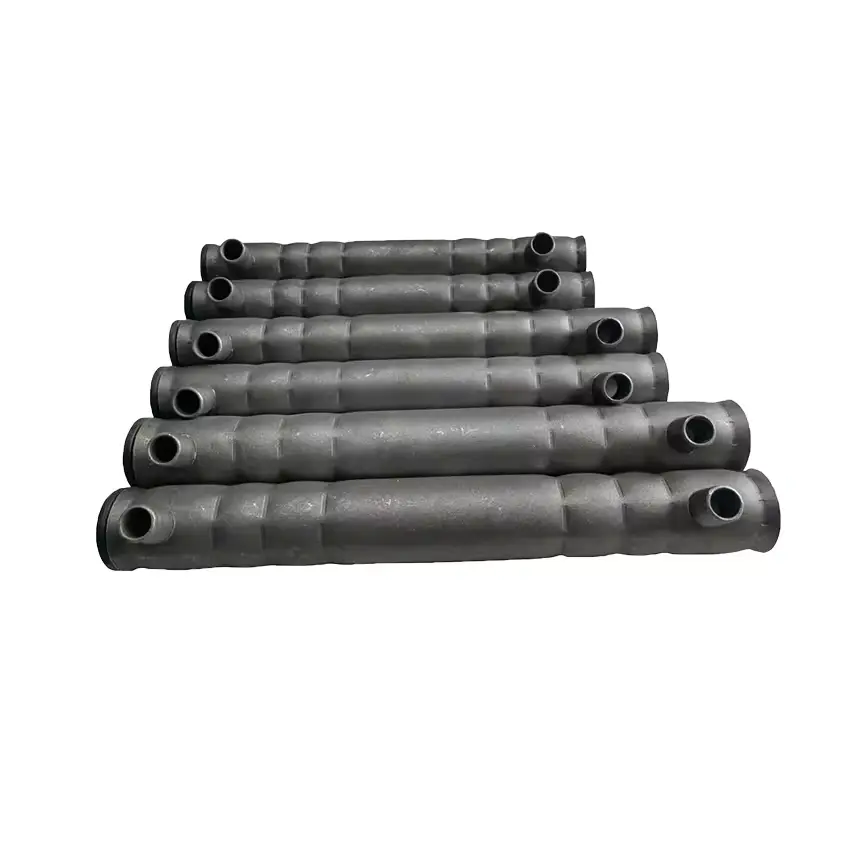
The sleeve is pre-embedded within the concrete precast element (such as columns or walls). During construction, another steel bar (extending from a separate element) is inserted into the opposite end of the sleeve. A specially formulated high-strength cementitious grout is then injected into the sleeve cavity. Upon setting, the grout transmits stress through interlocking and friction with the sleeve’s inner wall and the steel bar’s surface.
Full grout coupler for precast concrete - Advantages:
- Achieves ‘indirect connection’: Key to enabling prefabricated structures to deliver performance equivalent to cast-in-place concrete.
- Good alignment tolerance: Permits minor adjustments to reinforcement positioning.
- Superior seismic performance.
- Disadvantages:
- Complex process: Requires grouting, sealing and other procedures, with quality heavily influenced by grout material and workmanship.
- Curing period: Structural loading must await grout reaching specified strength.
- Challenging quality inspection: As concealed work, requires methods such as X-ray, endoscopy, or embedded sensors for verification.
Epoxy Coated Rebar Coupler
- Connection Principle:
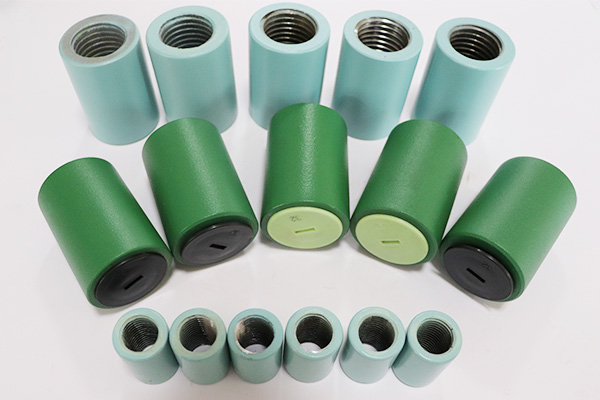
Epoxy coated rebar coupler are manufactured from high-quality carbon structural steel (grade 45#). Using electrostatic spraying technology, epoxy resin powder is applied to the surface of standard rebar sleeves. This epoxy-coated reinforcement sleeve exhibits excellent corrosion resistance, its bond strength with concrete is significantly reduced.
- Advantages:
- Corrosion Resistance: Epoxy sleeves, made from composite materials and epoxy resin, are inert, non-conductive, and resistant to electrochemical corrosion. They also withstand chemical erosion from substances like acids, alkalis, and salts. This fundamentally resolves the corrosion issues inherent in steel pipes.
- Strong Sealing: During curing, epoxy resin tightly bonds with the pipe’s outer wall, forming a permanent sealing layer. This effectively seals corrosion pits, cracks, and leak points on the pipe, preventing medium leakage.
- Convenient Installation: In most cases, installing epoxy sleeves requires no pipeline shutdown or drainage of internal media. This avoids significant economic losses from production halts, making it crucial for continuous industrial pipelines and critical urban lifeline pipelines.
- Environmentally Friendly & Safe: The entire installation process is a “cold operation” requiring no welding or open flames, completely eliminating fire and explosion risks in flammable/explosive environments for exceptional safety.
- Disadvantages:
- Surface preparation demands are stringent, as the cleanliness and roughness of the pipe surface directly determine the bonding quality between the epoxy sleeve and the pipe. A near-white grade (Sa 2.5) metallic luster must be achieved, with all grease, moisture, and contaminants thoroughly removed. Any residue will form a barrier layer, leading to bonding failure. Achieving this perfection is challenging on-site, especially in harsh environments (e.g., water-filled trenches, high humidity).
- Environmental conditions significantly impact epoxy resin curing speed and final performance, which are highly temperature-sensitive. Strict limits typically apply to ambient and pipe temperatures (e.g., not below 5°C). Temperatures below this threshold prevent proper resin curing, while excessively high temperatures shorten the working time (applicable time) and may even cause curing failure.
- Weak resistance to mechanical damage: Although cured sleeves exhibit high strength, their surface hardness is generally inferior to that of steel pipes. During backfilling or subsequent excavation operations, direct impact or scraping by sharp rocks or machinery can easily cause damage, compromising long-term performance.
- Higher initial material cost: Compared to traditional welded patches, the single-purchase material cost for epoxy sleeves is typically higher.
- Application:
It is suitable for reinforced concrete structures in industrial and civil buildings, general structures, roads, bridges, ports, and docks exposed to humid environments or corrosive media.
Weldable Rebar Couplers
- Connection Principle:
Weldable rebar couplers connections are primarily used to join reinforced steel columns (or structural steel columns) with frame beam rebars, achieving an efficient and reliable load-transferring connection between the two. The process relies on a specialized weldable rebar sleeve that serves a dual function:
- Welded end: Capable of being securely welded to the surface of the structural steel column.
- Threaded End: Features precision internal threads that mate with externally rolled threads on rebar ends.
During construction, loads are transferred through both the threaded engagement and the welded joint, achieving an equal-strength connection between the rebars. - Advantages:
• Essential Solution: The necessary method for connecting rebar to steel structures.
• Flexible Positioning: Allows for adjustment during installation; good tolerance accommodation.
• Compact Connection: Saves space. - Application:
• Steel-reinforced composite structures (SRC columns/beams)
• Prefabricated buildings (precast elements to steel nodes)
• Bridge bearings
• Equipment foundation embedments
Tapered Threaded Coupling(This represents an earlier form of threaded connection, now largely superseded by straight threads)
- Connection Principle:
The ends of the reinforcing bars are machined with external tapered threads, while the sleeve features internal tapered threads. By screwing two bars into the sleeve, the connection is achieved through the self-locking and compression effect between the tapered surfaces. - Advantages:
Faster connection speed; simpler on-site operation than straight threads, requiring no torque wrench – simply tighten. - Disadvantages:
Lower joint strength: As part of the reinforcement base material is removed during processing, strength typically only reaches approximately 1.0 times the base material standard strength, making it difficult to achieve high strength.
Poor alignment: Inadequate machining precision may result in misalignment of the bars post-connection.
Reduced quality consistency: Reliance on the tapered thread’s self-locking mechanism yields lower reliability than straight threads.
Why use rebar couplers?
1、Resolving the conflict between the fixed length of reinforcing bars and structural requirements
- Problem: Reinforcing bars produced in steel mills have limited lengths (typically 9m, 12m, etc.), whereas structural elements (such as bridge piers or shear walls in high-rise buildings) often require lengths far exceeding these dimensions.
- Solution: Multiple bars must be reliably joined together to achieve the continuous lengths specified in structural designs. Sleeve connections provide this capability.
2、Replacing and surpassing the shortcomings of traditional connection methods
Traditional methods for connecting main reinforcement bars primarily involve lap splicing and welding, but these exhibit significant shortcomings:
- Compared to lap splicing:
Material savings: Lap splicing consumes substantial additional reinforcement (lap lengths typically amounting to 40–60 times the bar diameter), incurring high costs. Sleeve connections incur virtually no reinforcement wastage.
Enhanced joint quality: In critical areas with dense reinforcement (such as column-beam junctions), excessive lap reinforcement complicates concrete placement, facilitating voids that compromise structural strength. The compact sleeve connection resolves concrete compaction issues.
Improved connection reliability: Lap joints rely on the bond between reinforcement and concrete to transmit forces, offering less assurance than the mechanical interlocking of sleeves. - Compared to welding:
More consistent quality: Welding quality is highly susceptible to welder skill levels, weather conditions (wind, rain, low temperatures), and power supply quality, frequently resulting in defects such as cold joints, porosity, slag inclusions, and undercut. Quality fluctuations are significant. Sleeve connections are prefabricated, standardised products offering stable, controllable quality.
Higher construction efficiency: Welding is slow, requiring skilled welders and substantial energy consumption. Sleeve connections are tightened with a spanner, achieving speeds several times faster and remaining unaffected by weather conditions.
Greater safety and environmental friendliness: Welding involves open flames, posing fire hazards and generating intense light and harmful fumes. Sleeve connections eliminate naked flames, offering energy savings and environmental benefits.
- Compared to lap splicing:
3、Meet the structural requirements of modern high-performance buildings
Particularly for structures such as earthquake-resistant buildings and bridges subjected to dynamic loads, the performance of steel bar joints is subject to extremely stringent requirements:
- Equal strength requirement: High-quality mechanical joints (such as Grade I joints) must exhibit performance superior to the parent material itself, meaning fracture occurs within the parent material rather than at the joint. This cannot be achieved with tied lap splices.
- High ductility requirement: A well-executed sleeve joint possesses ductility matching that of the reinforcing bar. It deforms under immense loads such as seismic forces without sudden fracture, thereby absorbing energy and ensuring the structure ‘fractures but does not collapse’.
- High fatigue strength: For structures like bridges subjected to millions of repeated loads, mechanical joints demonstrate significantly superior fatigue resistance compared to welded or lap splices.
4、Advancing the industrialisation and modernisation of construction
- Standardised operations: Socket and rebar thread processing can be prefabricated in the factory, requiring only on-site assembly, aligning with the direction of construction industrialisation.
- Facilitates quality control: Simple torque wrenches can verify whether joints are fully tightened, providing intuitive and quantifiable quality control measures.
- Adaptability to Special Conditions: In confined spaces, areas with dense reinforcement, or where rebar rotation is impractical, specialised sleeves such as double-threaded sleeves can be employed, offering exceptional flexibility.
Applications in Engineering
The scope of application for steel bar connection sleeves is exceptionally broad:
- High-rise buildings: Connections for vertical main bars in columns and shear walls, effectively reducing lap areas and optimising structural layout.
- Bridges and Tunnels: Critical junctions subjected to immense dynamic and fatigue loads, demanding exceptionally high reliability and durability at connection points.
- Precast Concrete Components: Core components enabling ‘dry connections’ in prefabricated construction, facilitating steel bar butt joints in beams, columns, wall panels, and similar elements.
- Large-Scale Infrastructure: Projects with stringent quality and longevity requirements, such as dams, nuclear power stations, motorways, and airports.
Conclusion
In summary, mechanical connection sleeves for reinforcing bars, as an efficient, reliable and economical joining method, are increasingly becoming a modern alternative to traditional lap welding techniques. They represent not only technological advancement but also a significant driving force propelling the construction industry towards industrialisation, standardisation and greener practices. When selecting sleeve types, comprehensive assessment must be conducted based on specific project requirements, bar specifications, load characteristics and construction conditions. Looking ahead, with the continuous refinement of standards and the deepening of sustainable principles, mechanical connection technology is poised to play an increasingly pivotal role within the global construction sector.